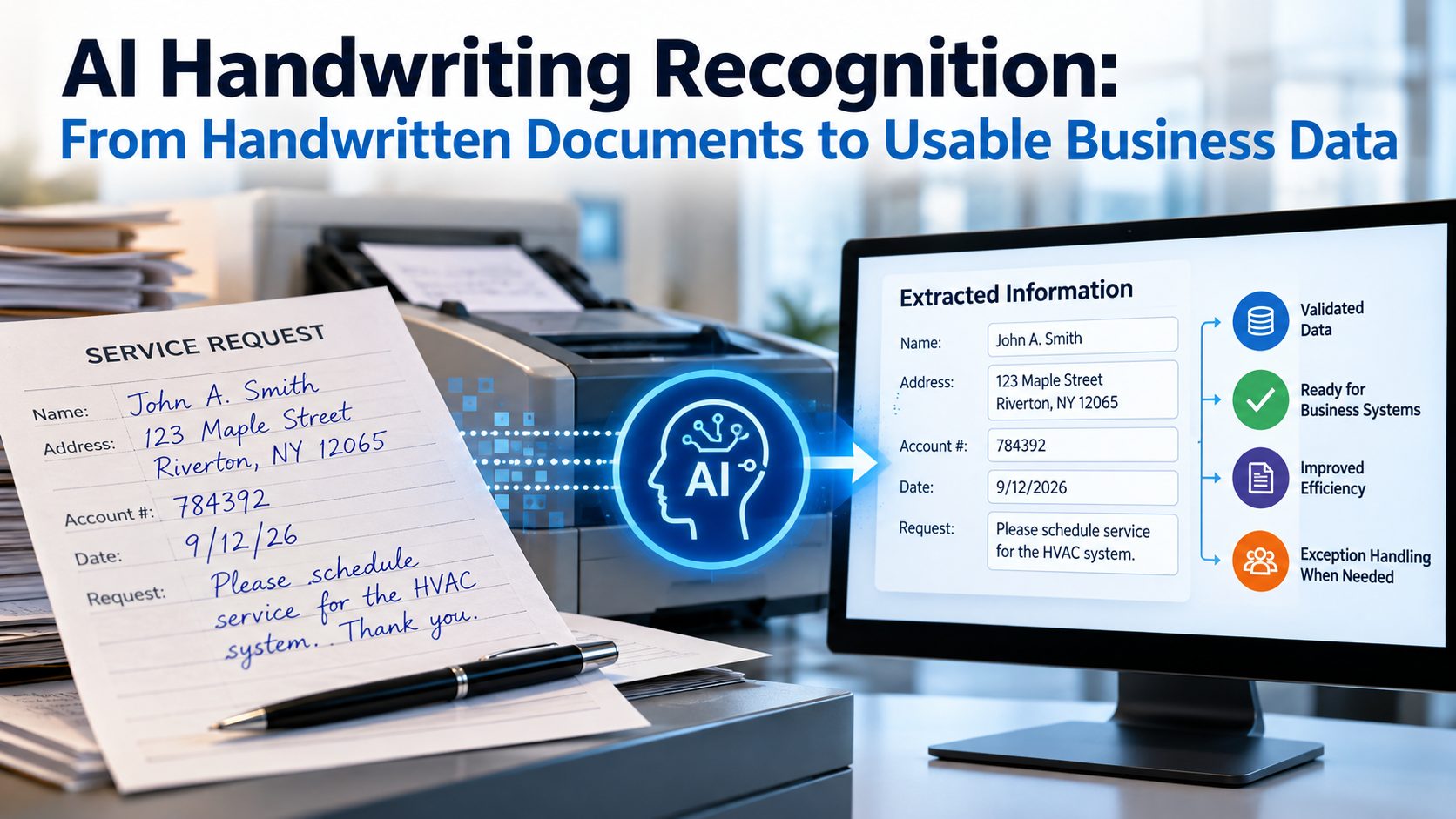
Organizations have spent years digitizing paper records, automating workflows, and modernizing mailrooms. Yet many still struggle with one persistent problem: they don’t always know where documents are, who is working on them, or whether something has stalled.
The issue isn’t simply about storing information. It’s about visibility.
Without visibility, even efficient workflows can become vulnerable to delays, bottlenecks, duplicate effort, and compliance risks. Documents may exist somewhere inside the organization, but if nobody knows their status, progress slows and accountability suffers.
As discussed in our previous article, Audit-Ready by Design, maintaining control over documents requires more than simply retaining records. Organizations need continuous awareness throughout the entire document lifecycle.
Real-time document visibility provides that awareness.
Why Traditional Document Processes Create Blind Spots
Many organizations still rely on disconnected systems and manual processes.
Documents may arrive through:
- Physical mail
- Email attachments
- Shared folders
- Department-specific applications
- Scanned files
- Legacy systems
Once information enters the organization, visibility often disappears and questions begin to surface:
- Has the document been received?
- Who currently owns it?
- Is additional action required?
- Has processing stalled?
- Are deadlines approaching?
These blind spots frequently create unnecessary delays.
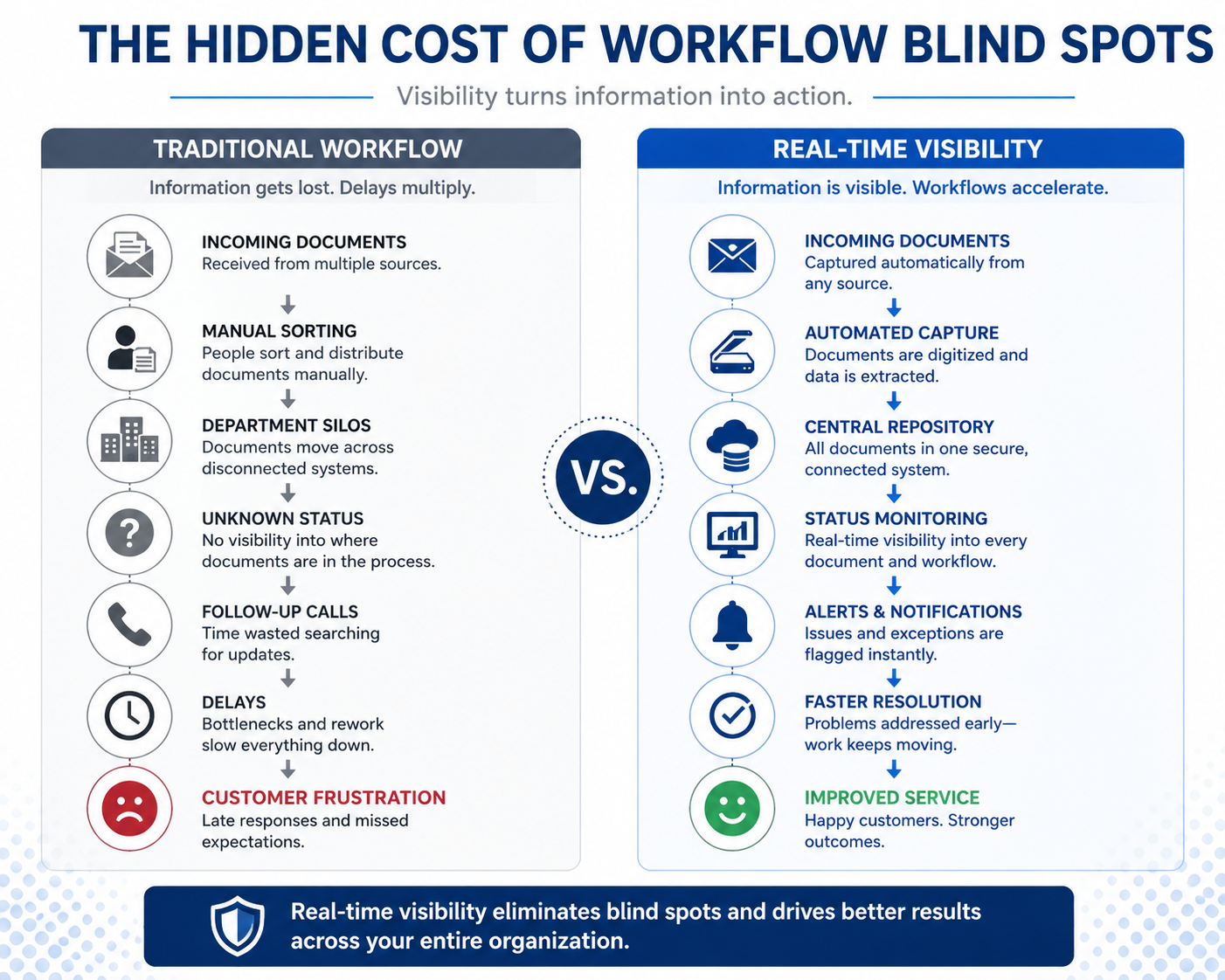
As explored in From Paper to Data, converting information into digital form is only the first step. Organizations must also maintain visibility throughout the journey.
The Cost of Not Knowing Where Documents Are
Workflow delays rarely happen because people are unwilling to do their jobs.
More often, delays occur because nobody knows where information is.
Poor visibility contributes to:
Slower decision-making
Employees spend time searching instead of acting.
Duplicate work
Documents may be rescanned, reentered, or recreated because status information is unavailable.
Customer service problems
Clients expect timely responses. Delays erode confidence and satisfaction.
Increased compliance exposure
Missing timestamps and unclear ownership make audits more difficult.
Lost productivity
Knowledge workers can spend significant time tracking down information instead of processing it.
These hidden inefficiencies were discussed in greater detail in Hidden Costs of Unstructured Documents, where fragmented workflows were shown to affect both operational performance and customer experience.
What Is Real-Time Document Visibility?
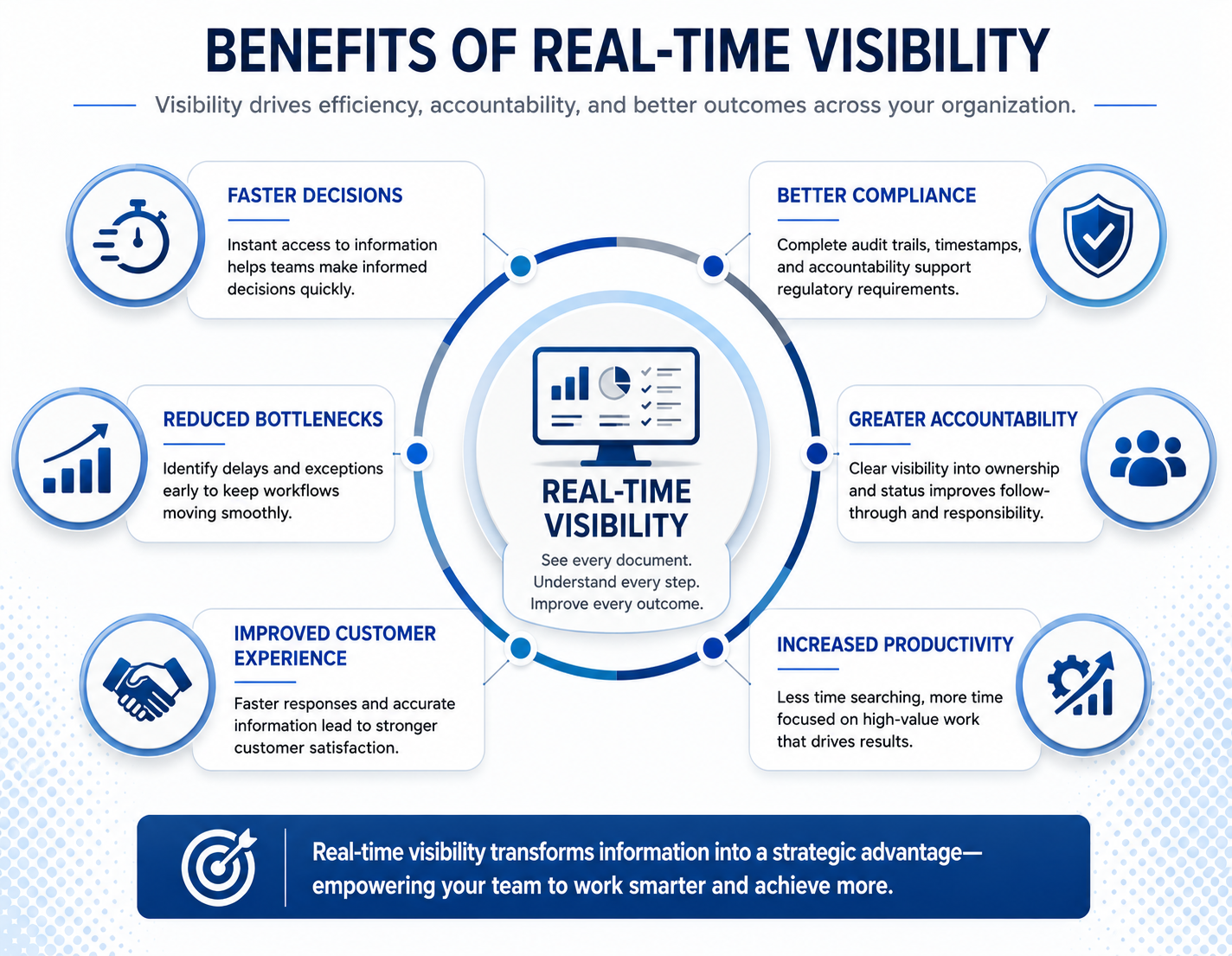
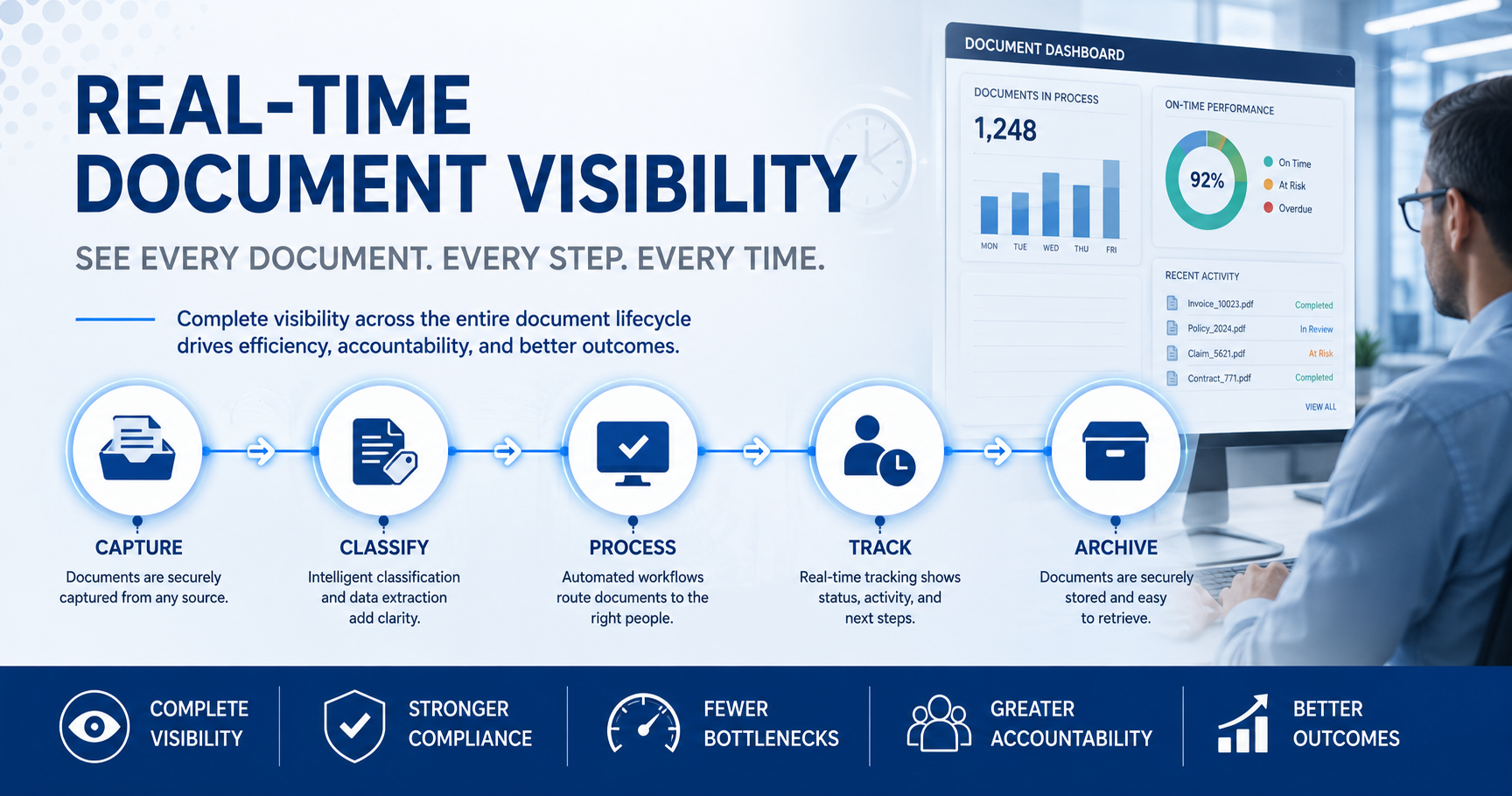
Real-time document visibility means understanding the status of information throughout its lifecycle.
Organizations can quickly determine:
- When a document arrived.
- Who interacted with it.
- Current status.
- Processing history.
- Next required action.
- Retention requirements.
Instead of isolated activities, workflows become transparent and traceable.
Visibility creates confidence because everyone works from the same information.
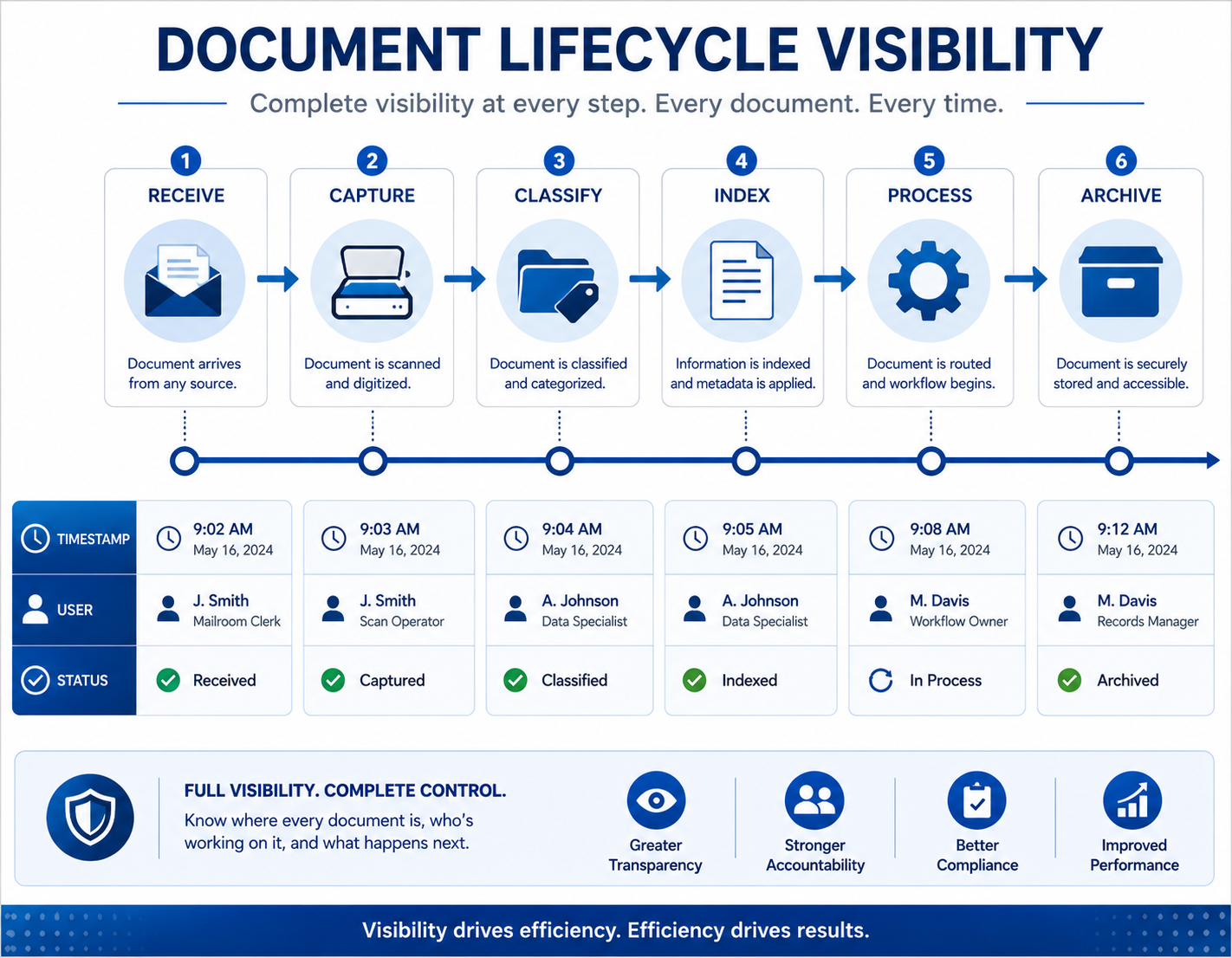
Benefits of Real-Time Document Visibility
Modern organizations increasingly depend on visibility to improve performance.
Faster Decisions
Employees spend less time searching and more time responding.
Reduced Bottlenecks
Workflow interruptions can be identified before they affect operations.
Greater Accountability
Clear ownership improves consistency and responsiveness.
Better Customer Experiences
Questions can be answered quickly because document status is readily available.
Improved Compliance
Timestamps and audit trails support governance initiatives.
Easier Audits
Complete histories simplify investigations and regulatory reviews.
Increased Productivity
Less time spent searching means more time spent creating value.
Visibility and Intelligent Document Processing Work Together
Visibility becomes even more powerful when combined with intelligent document processing.
Modern systems can automatically:
- Capture incoming documents.
- Extract information using OCR.
- Classify records.
- Apply metadata.
- Route work to the correct department.
- Monitor progress.
This creates a continuous flow of information rather than isolated steps.
Solutions such as INFOPoll®, INFOPointe™, and WebWarehouse® help organizations transform documents into searchable, trackable assets while providing the transparency required for modern operations.
The result is not simply automation, It is operational awareness.
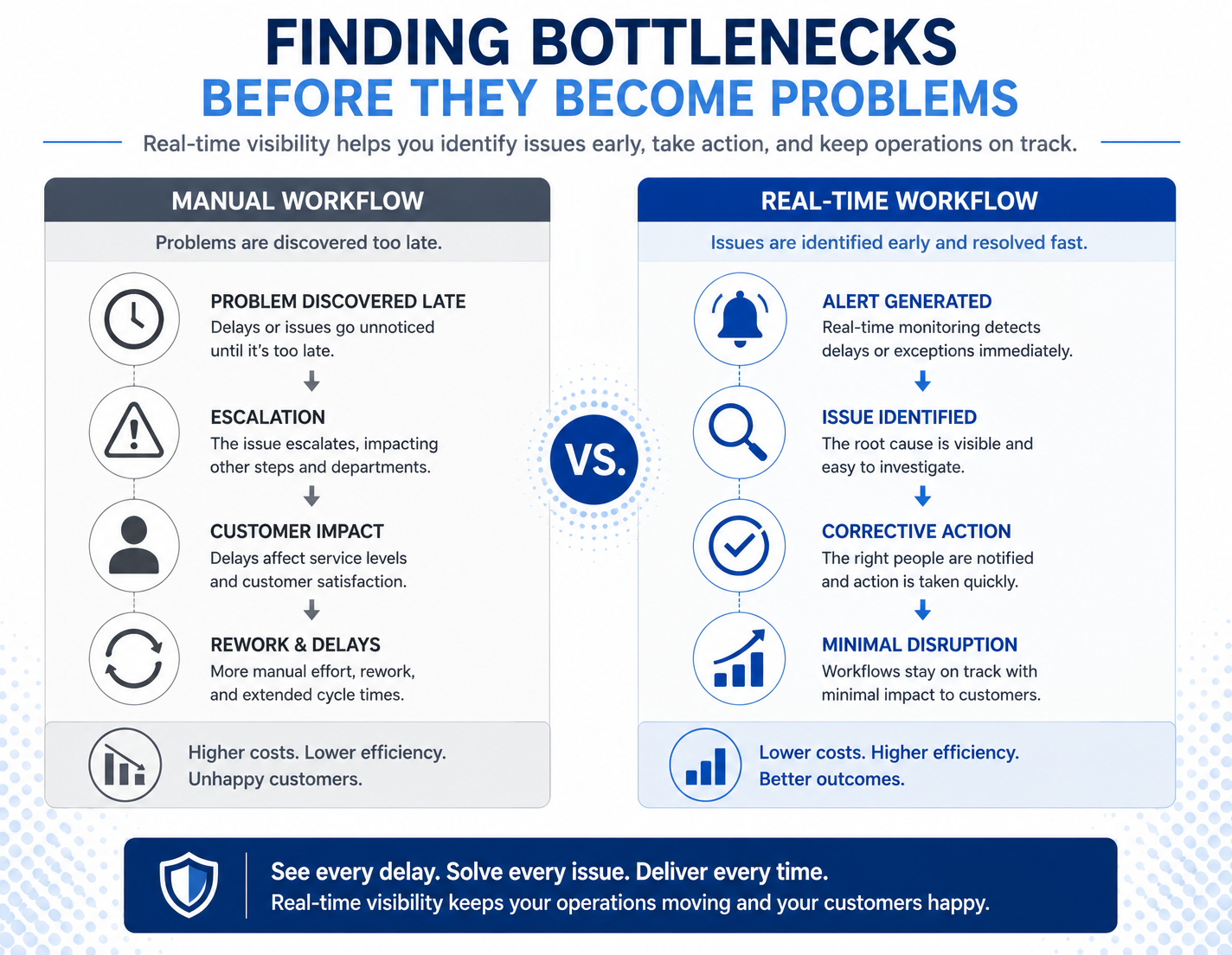
Real-Time Visibility Helps Prevent Workflow Bottlenecks
Every organization experiences exceptions and delays.
Approvals may take longer.
Manual reviews may be required.
Departments may become overloaded.
Without visibility, these issues often remain hidden until customers or auditors discover them.
Real-time monitoring changes that dynamic.
Managers can identify:
- Backlogs.
- Delayed approvals.
- Work queues.
- Exception cases.
- SLA risks.
Problems can be addressed before they become larger disruptions.
Visibility transforms workflows from reactive processes into proactive operations.
Why Visibility Supports Compliance and Audit Readiness
Compliance increasingly depends upon traceability.
Organizations need to know:
- Who accessed information.
- When changes occurred.
- How records were processed.
- Whether retention requirements were followed.
Visibility supports:
- Chain-of-custody.
- Audit trails.
- Accountability.
- Governance.
- Risk management.
These capabilities build naturally upon the principles discussed in Audit-Ready by Design, where maintaining document integrity and transparency was shown to be essential for long-term compliance.
Building Visibility Into Modern Document Workflows
Achieving visibility requires more than adding another software platform.
Successful organizations typically focus on:
Centralized repositories
Information should be accessible through a single source of truth.
Metadata and indexing
Searchable information improves retrieval and accountability.
Automated routing
Documents should move intelligently through workflows.
Monitoring and dashboards
Managers need immediate insight into process performance.
Digital mailrooms
Incoming information should enter workflows quickly and consistently.
Intelligent document processing
Automation reduces delays while improving accuracy.
Platforms such as WebWarehouse®, combined with advanced capture and workflow technologies, help organizations establish these foundations while supporting scalability and long-term governance.
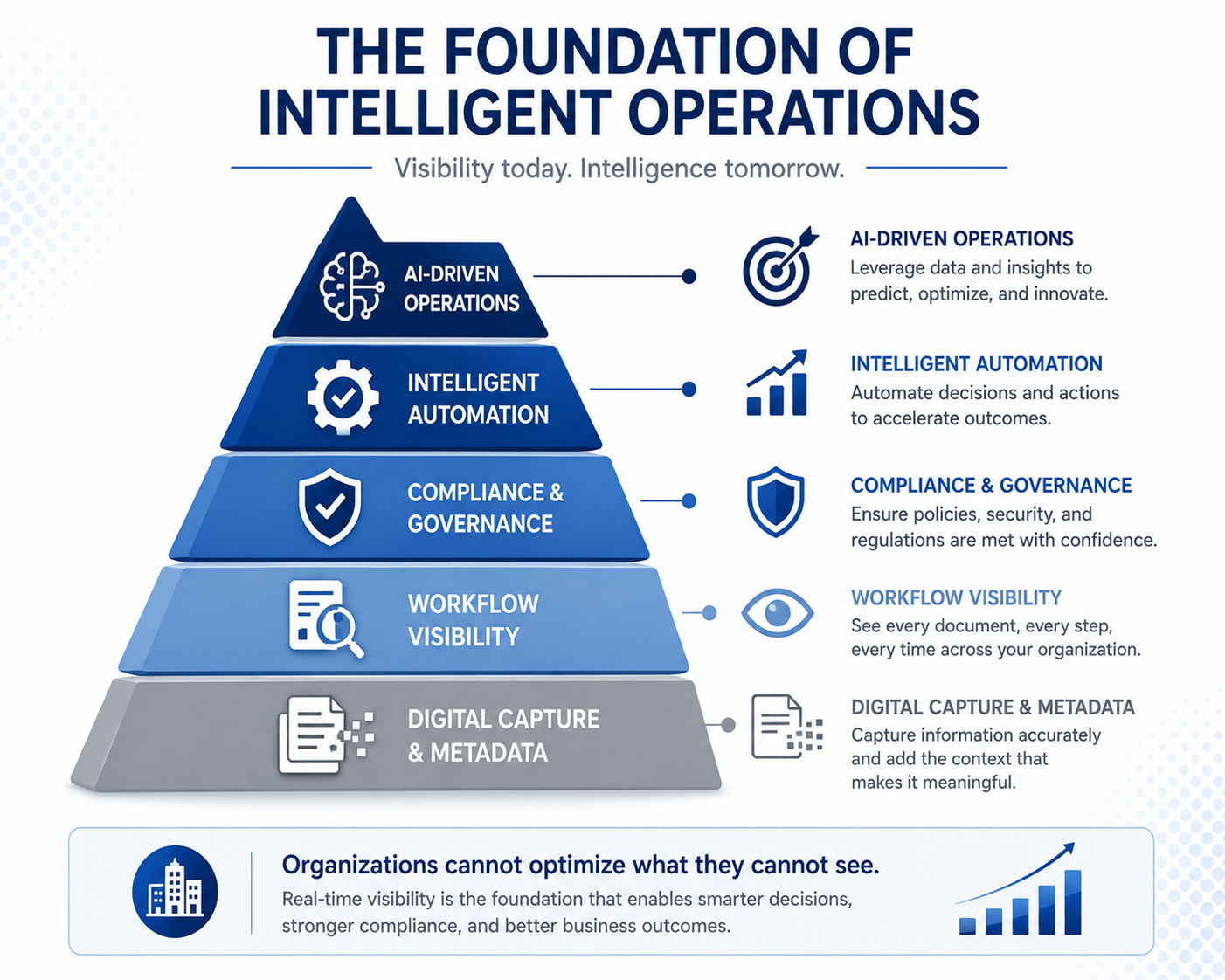
Visibility Is the Foundation of Intelligent Operations
Artificial intelligence, analytics, and advanced automation depend on one critical requirement:
Visibility.
Organizations cannot optimize processes they cannot see.
The future of intelligent operations depends on:
- Searchable information.
- Consistent metadata.
- Workflow transparency.
- Accurate document histories.
- Accessible repositories.
These capabilities create the foundation for AI-ready document workflows and intelligent mailroom operations—topics we will explore in future articles.
Frequently Asked Questions
What is real-time document visibility?
Real-time document visibility provides organizations with continuous insight into where documents are, their status, ownership, and processing history throughout the workflow lifecycle.
Why is document visibility important?
Visibility helps organizations reduce delays, improve customer service, strengthen compliance, and increase productivity by making workflows transparent and easier to manage.
How does document visibility support compliance?
Visibility creates audit trails, timestamps, and chain-of-custody records that support governance and regulatory requirements.
What technologies improve document visibility?
Technologies such as digital mailrooms, OCR, metadata management, workflow automation, and intelligent document processing platforms improve visibility.
What is the relationship between document visibility and AI?
Artificial intelligence depends on structured, searchable, and visible information. Real-time visibility creates the foundation needed for AI-ready document workflows.
How does a digital mailroom improve document visibility?
Digital mailrooms improve document visibility by capturing incoming information, applying metadata, routing documents automatically, and providing real-time status updates throughout the workflow lifecycle.
Looking Ahead: The Cost of Invisible Workflows
Organizations often focus on the cost of hardware, software, and labor. Yet some of the largest expenses arise from inefficiencies that remain hidden.
Without visibility, delays, duplicate work, rehandling, and bottlenecks quietly increase operational costs.
Understanding where those costs originate is essential to improving efficiency.
In our next article, we’ll explore: Where Document Processing Costs Really Come From
Conclusion
Real-time document visibility is about far more than locating files.
It creates transparency, accountability, and confidence throughout the document lifecycle.
Organizations that understand where information is—and what is happening to it—are better positioned to:
- Improve customer service.
- Reduce bottlenecks.
- Strengthen compliance.
- Support audits.
- Enable intelligent automation.
- Prepare for AI-driven operations.
In today’s information-driven environment, visibility is no longer a luxury.
It is becoming a competitive necessity.
Key Takeaways
- Real-time document visibility improves transparency across workflows.
- Visibility helps reduce bottlenecks and delays.
- Strong visibility supports compliance and audit readiness.
- Intelligent document processing becomes more powerful when combined with workflow visibility.
- Visibility provides the foundation for automation and AI-ready operations.
- Organizations that understand where information is can make faster, more informed decisions.
Related Articles
From Paper to Data: How Digital Mailrooms Transform Enterprise Workflows
Discover how digital mailrooms help organizations turn incoming documents into searchable information.
Hidden Costs of Unstructured Documents
Learn how fragmented workflows create inefficiencies, delays, and hidden operational expenses.
Audit-Ready by Design
Explore how visibility and chain-of-custody support stronger compliance and audit readiness.
Coming Next:
Where Document Processing Costs Really Come From
Table of Contents
Share This!
Related Posts
Agissar not only has a history of game-changing advances in the mail extraction industry, we also have a stellar reputation for excellent products, services and attention to detail that has been built over decades. It shows in our relationships with suppliers, clients, and our ability to get excellent value for your dollar while supporting a wide range of mailing, imaging, and office products from the simple to the complex. We can custom tailor service programs to meet your needs and help you get to the top of your industry, all you need to do is contact us today!