
The Quiet Revolution Happening Inside the Mailroom
Most people still picture a mailroom as stacks of envelopes, bins of paper, and employees manually opening and sorting incoming documents. But in many modern organizations, that image is rapidly becoming outdated.
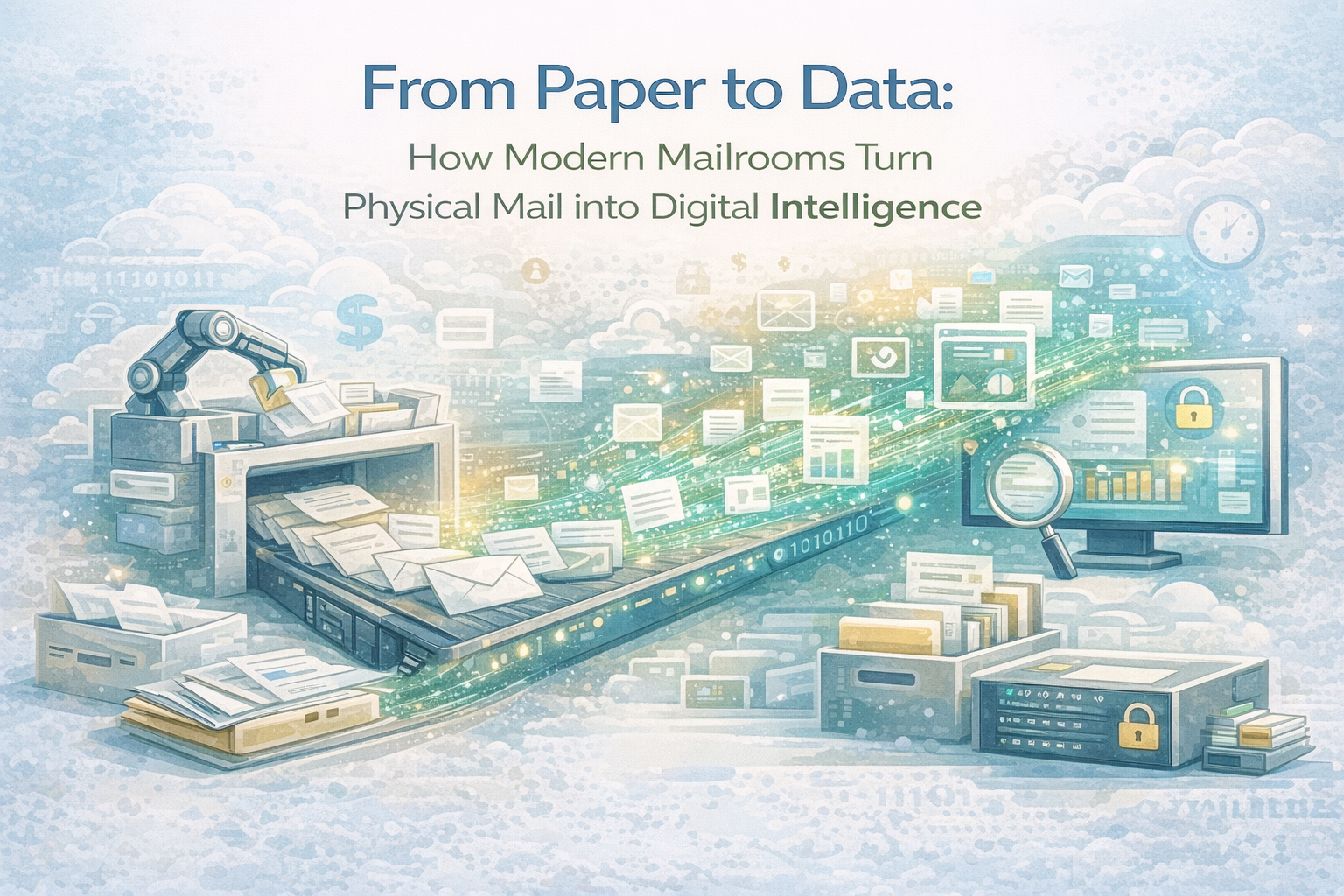
Today’s leading enterprises are transforming their mailrooms into data processing centers. Instead of simply delivering envelopes, modern mail operations convert physical documents into structured digital information that feeds business systems, analytics platforms, and compliance workflows.
This transformation is often called the digital mailroom.
For organizations handling thousands or even millions of documents every year—financial institutions, healthcare networks, government agencies, insurance companies, and legal firms—this shift is more than a convenience. It is becoming essential.
The ability to convert paper mail into usable data quickly and securely can mean faster decisions, improved compliance, and dramatically lower operating costs.
Solutions like Agissar’s INFOPoll and WebWarehouse platforms play a key role in enabling this transition by connecting physical mail handling with intelligent document management.
Why Paper Mail Still Matters
Despite decades of predictions about the “paperless office,” physical mail remains deeply embedded in many business processes.
Organizations still receive large volumes of:
-
Contracts and legal agreements
-
Financial documents and remittances
-
Government correspondence
-
Insurance forms
-
Medical records
-
Customer applications
-
Regulatory notices
According to industry research, large enterprises may still receive thousands of physical documents per day, especially in regulated industries.
The challenge is not eliminating paper entirely. Instead, the goal is capturing the information inside those documents quickly and accurately so it can move through digital workflows.
From Envelope to Intelligence: The Modern Mailroom Workflow
A modern automated mailroom follows a clear transformation process that converts incoming documents into searchable digital assets.
This process typically includes five stages.
1. Document Intake
Every workflow begins when physical mail arrives.
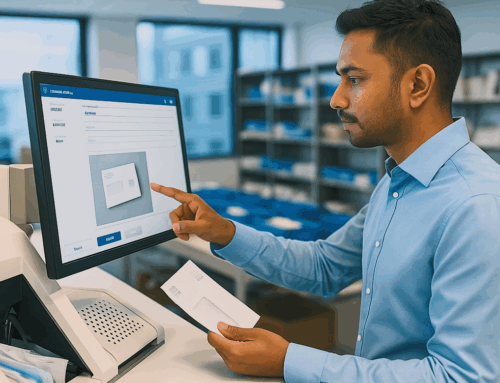
Incoming mail is sorted by type, department, or processing priority. High-volume organizations often use automated mail opening systems that carefully extract documents without damaging their contents.
Automated extraction dramatically increases processing speed while reducing manual labor.
Once documents are extracted from envelopes, they move to the next stage of the workflow.

2. Document Capture and Scanning
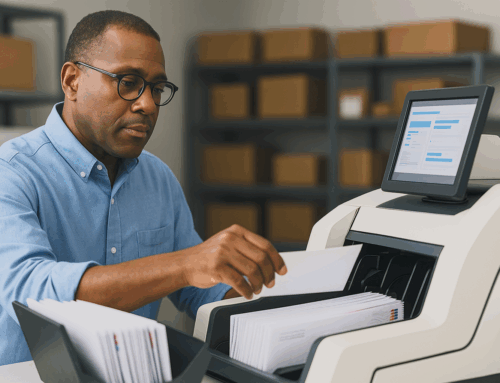
After extraction, documents are digitized through high-resolution scanning systems.
Modern capture systems can process thousands of pages per hour while preserving image clarity and accuracy.
Scanning converts paper into digital files such as:
-
searchable PDFs
-
structured document images
-
digital forms
However, simply scanning documents is not enough. Without proper indexing and classification, scanned documents can quickly become digital clutter.
This is where intelligent document processing begins.
3. Classification and Metadata Tagging
Once documents are digitized, the system must identify what they are and where they belong.
Advanced mailroom systems classify documents based on:
-
document type
-
sender information
-
form layout
-
content recognition
Metadata is then attached to each document.
This metadata might include:
-
customer account numbers
-
case identifiers
-
document categories
-
processing timestamps
Agissar’s INFOPoll system plays a crucial role at this stage by tracking documents throughout their lifecycle and ensuring each document is correctly identified and logged.
The result is a document that is no longer just a scanned image—it is now structured business information.

4. Workflow Routing
After classification, documents must be routed to the correct department or system.
In a traditional mailroom, this process relied on manual sorting and physical delivery.
Modern digital mailrooms instead route documents automatically to:
-
finance departments
-
compliance teams
-
claims processors
-
legal teams
-
customer service platforms
Routing rules ensure that the right people receive the right documents immediately.
This eliminates delays and dramatically improves processing speed.
5. Secure Archiving and Data Access
The final stage of the workflow is long-term document storage and accessibility.
This is where platforms like WebWarehouse become essential.
WebWarehouse allows organizations to store documents securely while maintaining instant retrieval capabilities.
Documents can be:
-
searched by metadata
-
retrieved instantly during audits
-
shared securely across departments
-
protected with access controls
Instead of searching filing cabinets or offsite storage boxes, employees can retrieve critical records in seconds.

The Hidden Value: Turning Documents into Data
The real advantage of a digital mailroom is not simply scanning documents. The true benefit comes from turning document content into actionable information.
Once documents become structured digital records, organizations can:
-
analyze trends across large document volumes
-
track operational performance
-
identify workflow bottlenecks
-
improve customer service response times
For example, a financial institution may analyze incoming loan applications to understand processing delays.
A healthcare provider might track patient documentation workflows to ensure regulatory compliance.
A government agency could monitor document processing times to improve public service delivery.
In each case, physical documents become part of a data ecosystem that supports better decision-making.
The Role of Automation in Modern Mailrooms
Automation is the engine behind this transformation.
Without automation, organizations struggle to keep pace with growing document volumes.
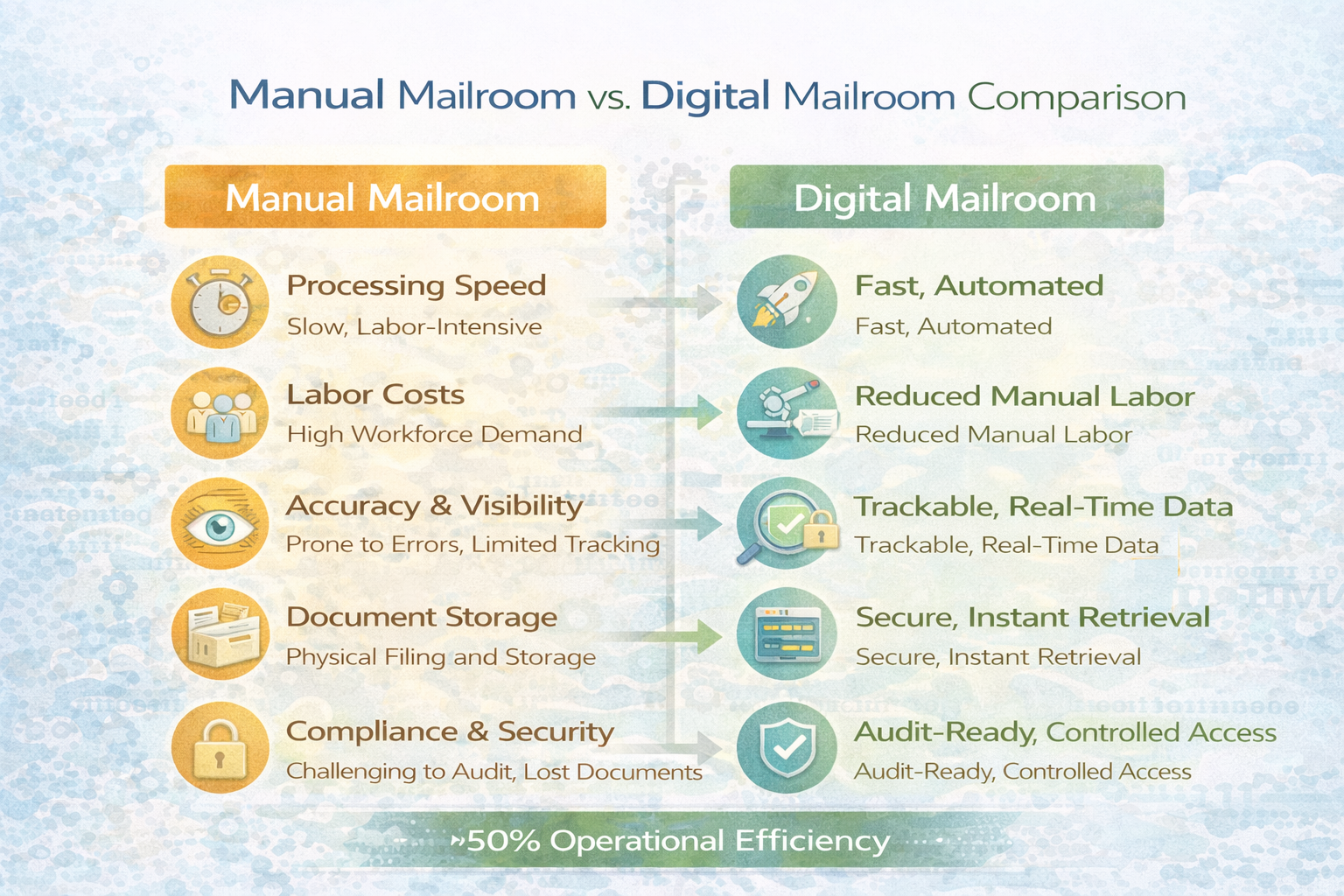
Manual mailrooms often experience:
-
delayed processing times
-
data entry errors
-
misplaced documents
-
high labor costs
Automated document processing dramatically reduces these risks.
Technologies like INFOPoll allow organizations to track documents across every stage of processing while ensuring chain-of-custody visibility.
Meanwhile, WebWarehouse provides a secure digital repository that ensures records remain searchable and compliant for years.
Compliance and Security Considerations
Document processing systems must also support regulatory requirements.
Organizations dealing with financial, healthcare, or legal data must follow strict standards such as:
-
HIPAA (healthcare privacy)
-
SOX (financial accountability)
-
GDPR (data protection)
-
industry-specific audit requirements
Modern mailroom platforms help organizations maintain compliance by:
-
logging document access
-
tracking modifications
-
maintaining audit trails
-
enforcing retention policies
When documents are digitized and stored in controlled environments, organizations reduce the risk of lost records or unauthorized access.
The Operational Benefits of Digital Mailrooms
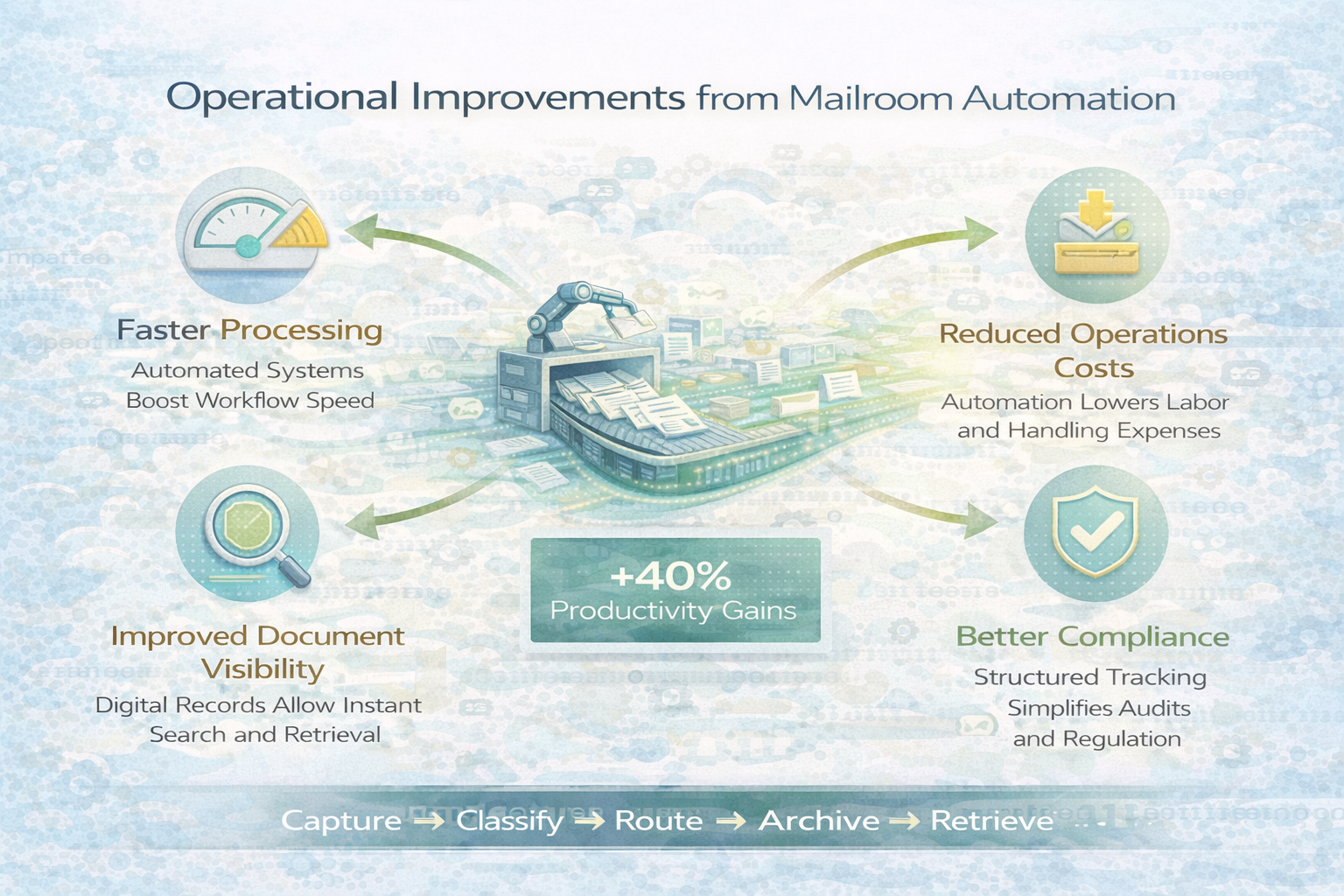
Organizations that modernize their mailrooms often report several measurable improvements.
Faster Processing
Automated workflows allow documents to move through systems far more quickly than manual processes.
Reduced Operational Costs
Automated document handling reduces the labor required to open, sort, and distribute mail.
Improved Document Visibility
Digital records allow employees to find information instantly rather than searching physical files.
Better Compliance
Structured document tracking helps organizations meet regulatory standards and prepare for audits.
Enhanced Customer Experience
Faster document processing leads to quicker responses for customers, clients, and citizens.
Why Mailroom Transformation Is Accelerating
Several global trends are pushing organizations toward modern document automation.
These include:
-
increased regulatory oversight
-
rising document volumes
-
remote work requirements
-
digital transformation initiatives
Organizations that modernize their mailrooms gain a significant operational advantage.
Instead of acting as a bottleneck, the mailroom becomes a gateway to enterprise data intelligence.
The Future of the Mailroom
Looking ahead, the role of the mailroom will continue to evolve.
As technologies like artificial intelligence and machine learning improve document recognition, organizations will gain even greater ability to extract insights from incoming documents.
But the foundation of that future is already here.
It begins with transforming paper documents into secure, searchable, and structured data.
Solutions like INFOPoll and WebWarehouse help bridge the gap between traditional mail handling and modern digital information management.
Final Thoughts
Paper mail is not disappearing anytime soon.
However, the way organizations handle incoming documents is changing dramatically.
The most successful organizations are no longer treating the mailroom as a simple distribution center. Instead, they see it as the first step in a powerful data processing pipeline.
By converting paper into structured digital intelligence, businesses can operate faster, stay compliant, and unlock the hidden value inside their documents.
For organizations looking to modernize their document workflows, the digital mailroom is no longer an experimental idea—it is becoming the new standard.
Contact Agissar today to modernize your mail and data processing pipeline.
Table of Contents
Share This!
Related Posts



Agissar not only has a history of game-changing advances in the mail extraction industry, we also have a stellar reputation for excellent products, services and attention to detail that has been built over decades. It shows in our relationships with suppliers, clients, and our ability to get excellent value for your dollar while supporting a wide range of mailing, imaging, and office products from the simple to the complex. We can custom tailor service programs to meet your needs and help you get to the top of your industry, all you need to do is contact us today!